Tuesday, October 15, 2013

KL


This Pchum Ben holiday I took my lovely assistant to KL. I wanted to thank her for all her support & good work. I also wanted her to see what somewhere other than Cambodia is like. She would like to find a scholarship to study overseas but I wanted her to know what overseas was like first.

We flew from Siem Reap so we also had an opportunity the day before to visit Angkor Wat. For me it was my 7th visit there. For L it was her first as an adult, she had been once before as a small child. It absolutely poured with rain - Pchum Ben is traditionally the wettest time of year - like a UK August bank holiday!

That evening I traumatised L by ordering spring rolls that had pork & not shrimp the advertised in them - she is vegetarian. Then an american tourist knocked my drink all over me by swiping our table with her bag. She then proceeded to deny any responsibility. Truth was I was pretty wet already from the saturated temple visit. 

Umbrellas brightening up the grey & acting as lightening rods!

Angkor Wat

As for Malaysia I think I will just leave it to L for the words & I will just provide some photos....

            "After I visited Kula Lumpur in Malaysia for several days on Pchum Ben day, I found out there are some similarities and differences from my own country, Cambodia. Malaysia is much different from Cambodia.  It is really modern city. It has a lot of high standard buildings. There are trees around the city and buildings. There are also many restaurants and shops for us to go for eating and shopping. Varieties of foods and clothes are offered, such as Indian, Chinese, Western, etc. Moreover, the public transportation is very good and well-organized. It is easy to find the bus, taxi, and train. They are fast. And, the roads are really good and clean. On the sidewalks, there are shelters for passengers to relax. Over the driving roads, there are roads with the roof for walking. So even it is raining, you can walk easily without getting wet. The environment in the city is good. It is clean and has light all days even it is at night. Beside the modern infrastructures and public transportations along with clean, good environment, however, people there are not really friendly. Even you say hello, they seldom smile and talk back to you. They do not care about you. But there are also similarities to Cambodia. It seems everything is more expensive for the tourists. People seem overcharge for us. For example, when we looked for the taxi, the taxi driver gave us high price which is not usual price. It is the same in Cambodia. And the men are the same. Most of them are arrogant and look down to women. When I walked on the roads, men blink and do some bad signs to me. They do not respect women. All of these are some similarities and differences between Malaysia and Cambodia."

What she has omitted to write about is;

She suffered terrible travel sickness that resulted in an incident with a plastic bag with a hole in it just minutes from arriving at our hotel in the shuttle bus.

Every thing was cooked in coconut oil & the rice in Malaysia is no where near as good as Cambodian rice. 

I lost the ability to navigate or read a map & we got horribly lost. 

We nearly missed our flight back due to a combination of taxi related human & mechanical error.

On returning to Cambodia L's house was under flood water.

She sent me this in a text shortly after - "This is Cambodia - dirty country"

What have I started?


Bus shelter appreciation 

View from KL Tower


Bird Park

Our hotel had great views at night.....


....and day....


...and at sunset.


Little India market

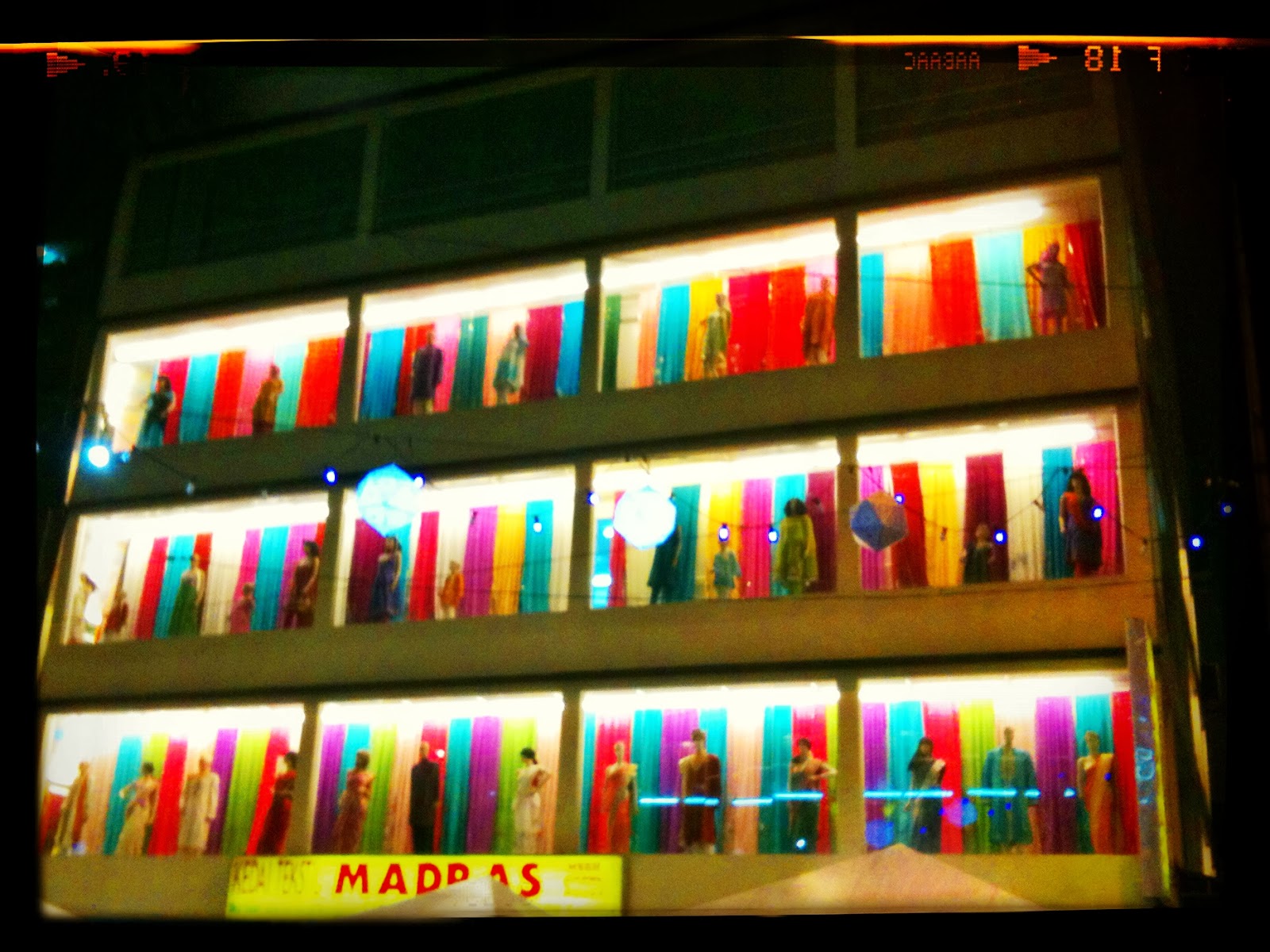
Little India Sari Shop


This souvenir at the bird park really amused L - R100 is worth 1.5 pence, RM9.80 is £1.93

Sunday, October 13, 2013

When you believe in things you don't understand

Last week I read a story from my grade 4 khmer text book & from what I can gather this is the plot (bearing in mind my khmer is still extremely grade 1 but S, my khmer teacher, keeps dragging me onwards & upwards regardless); A father & son are travelling in a boat & the son asked the father where did the rivers & mountains come from. The father told his son this story about a boy going to get a girl from another empire where the king of the monkeys had abducted her (I think). For some reason the king of the monkeys uses a sacred sword to make 2 furrows in the ground or maybe he gets the boy to do it, these become two rivers. But they need to make a causeway across to the sea so the monkey king ties clumps of earth to his leg hair & flies but meets a rain storm & the strong winds shake off the earth from his leg hair & they fall on the ground to form mountains. I think the boy gets the girl.

There was an exercise after the story with 4 questions.

1) The son asks the father about what?
2) The rivers & mountains were made how?
3) The king of the monkeys orders the boy to do what?
4) This story is true or not true? Why?

When we got to question 4) I laughed & said clearly it is not true. S looked at me sideways with an expression that I have grown very accustomed from all Cambodians, which wordlessly says "I do not believe or trust you." She said to me - No, you are wrong, I think this is a true story.

Have you ever tried to explain plate tectonics & geology in another language which you have barely 200 words of? Thankfully S has a world map, speaks at least 2 out of the 3 languages we both share with much more proficiency than me; plus her english is infinitely better than my khmer & I struck lucky with volcano in khmer being Phnom Pleung very early on in the explanation/debate/persuasion.

The larva & volcano break through got her thinking I may actually be on to something, the explanation of the boxing day tsunami was further evidence. I could see the was giving it serious consideration - so the story was fiction right? - I reasserted.

She screwed up her face & told me she still wasn't sure.

A monkey king flies in the sky & earth the size of mountains falls from his leg hair - Do we really think this is based on a real life event?

Apparently one of us still did.

Then inspiration struck, a few months ago I had purchased the grade 4 answer book, anticipating exactly this kind of situation. So I leapt up, retrieved the book & asked S to check the answer of question 4 in it.

She read out that it was indeed not a true story. The second part of the question, why? because it didn't mention the exact date that it happened.

Giant monkey king flying & dropping from his leg hair clods of earth the size of mountains apparently entirely probable but what was really wanting was a precise date when this very realistic event actually occurred.

I really am not exaggerating.

This episode not unsurprisingly inspired the superstition blog.


Saturday, October 12, 2013

Very superstitious, nothing more to say

Cambodians are a superstitious lot.

They generally believe in ghosts, spirits, fortune tellers, karma, traditional (harmful) remedies & practices, dream prophesy, a magic log for predicting lottery numbers to name just a few. It is easy to mistakenly think that these superstitions are only really limited to  rural, uneducated people but the truth is that I haven't met many Cambodians that aren't significantly superstitious.

There also seems to a general lack of skepticism, unless its regarding something a foreigner says, which results in people readily believing propaganda, gossip & rumour. With the recent flooding this rainy season the conspiracy theory circulating was that the government had caused the floods by letting Thailand open flood gates, whilst protecting themselves in Phnom Penh. Support for this theory was that only the northern provinces were flooded & the southern capitol was not. Phnom Penh was in fact knee deep in water but when I tried to explain this, I have friends who live there & post regularly on Facebook,  my counter argument was immediately dismissed.  Reason & evidence are not very powerful tools when used in a debate here, as they might well be elsewhere in the world. 

Doctors here will have coining when they get a headache. My assistant's father believes that a certain sort of moth gives you TB. My land lady 'disappeared' half of scabby dog's puppies because 6 is an 'unlucky' number & 3 is 'lucky'. My khmer teacher believes I have had a love spell cast in me - not as a metaphor but as a real-life spell that requires numerous ceremonies to break it. A friend's baby will grow up 'retarded' because she didn't wear a hat.

My friend was in a foul mood in work this week. Turns out a fortune teller had told him he would lose a limb in an accident this year so he must urgently do a ceremony which will cost $30. When I suggested that he save his money & not do the ceremony so he can feed his family for a week I was met with scorn. So I asked him did the fortune teller ever tell him good things - not often he admitted but he didn't believe the good things anyway, just the bad. Better to spend money to prevent an accident than have to pay expensive medical fees was his reasoning. 

He also believes in ghosts & along with 14 million other people here. One nurse I used to work with was one of the few Cambodians I've met who actually doesn't believe in spirits. His mother became ill soon after her mother died & was convinced that she had been possessed by the spirit of her mother. He asked my advice about how he could manage what sounded to me to be anxiety & a normal grief response. Even though he didn't believe in ghosts or share his mother's 'traditional' beliefs, I suggested he should do as his mother wanted, which was to go to the Pagoda & be exorcised by a monk. He was skeptical but did it & it worked. 

Beyond understand the culture of a country & the health belief systems imbedded in it you would think none of this should effect me very much but this superstition & associated lack of critical thinking extends to health workers, which means they don't believe a word I say. I am not mocking Cambodians for being so superstitious rather highlighting it as one of the many barriers to effective capacity building here.

I asked R when he was head nurse & J was a VSO volunteer in his hospital did he disregard her advice & ideas the same as the staff we currently work with do. Turns out not, which is why he has been working with J for 5 years. He may be superstitious but he is also open minded & adaptable. 

So did you accept everything J told you? - I probed. 

Of course not! - he snapped (he has the limb loss thing hanging over him remember) - I would listen, think about it, see if it made sense & if she could prove she was right & her way was better I would do - he explained to me. 

100% of the time?

No maybe 95% of the time.

And the other 5% - why didn't you follow that advice?

Not because I didn't believe the evidence - he assured me - but because it was difficult to do in the current situation like doing 15 minutely vital signs on an emergency patient for example.

I conceded that in the UK we had an automated machine that would monitor a patient in resus & then the nurse could retrospectively fill in the observation from the machine's memory if they were too busy giving drugs, taking bloods etc. at the time.

So what do me & J do that you find odd or strange? - I was curious to know.

Silence.

What do we believe that you don't understand? - I persisted

Nothing - he eventually shrugged.

Now this answer could be due to one of two reasons;

1) J & I are devoid of any cultural opposing beliefs or behaviours (very unlikely)
or
2) R is too self absorbed to even consider any one other than himself......

Realistically I know I can't change superstition here but I can try to understand it so as to work better within the healthcare system to help improve it; working with open minded, if some what superstitious, health workers such as R.

But as Stevie Wonder would sing - "When you believe in things that you don't understand.Then you suffer. Superstition ain't the way"


Friday, October 11, 2013

How things go

This is generally how things go.

Arrive at hospital to find a patient in the ER, initially came in shocked & was resuscitated with IV fluids & transferred to the ward. 2 days later became unwell with shock again so was transferred back to the ER. In the UK this would be seen as retrograde step in the patient pathway, which would never happen or be tolerated but as the ER is the only place in the hospital with oxygen cylinders, suction machine, airway equipment, nebuliser machine (donated by URC), ventilator (new from MoH) & cardiac monitor (new from donor) this was actually the best move for this patient.

In my experience if I get involved too early in patient care the medical staff will get really defensive & aggressive or just ignore my advice. I have learnt to let them run their clinical course, reach a diagnosis or management dead end & then they might ask me for help. They are pretty stubborn & proud so this can sometimes be days. DO you have any idea how hard this can be when a patient is really sick but you know if you do something or try to help if will just make the situation worse as they may deliberately do the opposite of what you suggest?

This time it took 2 days.

Early on the second morning I found her in the ER with no one observing her so I took this opportunity to take a history & examine her myself.

These were my findings - she had a 2 week history of total body pain which all started with a painful & swollen left leg. She had then developed breathlessness & pleuritic chest pain. When she first presented to the hospital her blood pressure was unrecordable & she had collapsed at home. Her heart rate had been a persistent sinus tachycardia of 120/minute for the last 3 days.

I had bought some ECG dots for the hospital (I buy great presents!) & used her the day before to demonstrate how to use the monitor, she was happily throwing off atrial ectopics & having runs of atrial bigeminy. I tried to show the medical staff this but as they don't fully understand what a p wave is yet this was a bit of a struggle. They looked at the monitor with the same intensity as parents in PICU. I have often thought it would be good to have a TV playing behind the vital sign wave forms on these monitors so at least people would understand something that was on the screen.

She had a raised JVP & a parasternal heave. Her oxygen saturations were 89% on room air.

All of the evidence was pointing towards her having a pulmonary embolism - PE.

Just as I had finished my examination one of the more amenable MAs came in & I relayed to him my findings & my differential diagnosis - or as my nurse friend likes to call it "best guess"!

He agreed & wanted her to be transferred to the referral hospital but said the other MAs did not agree so could I help him. We went to the hospital morning meeting together & afterwards I went through my history, examination & investigation findings with all the medical staff. I explained that the patient's initial treatment with oxygen & fluids was excellent but she needed a 12 lead ECG & ECHO, which were not available at this hospital. Like all chest pain she should receive aspirin but also needed heparin, which was not available at this hospital either. Her current treatment of IV dextrose & vitamins was probably not going to be very affective for treating her sinus tachycardia.

Rather than agree to transfer her or ask questions about the signs & symptoms of PE the deputy director attacked me. "All patients are liars, they are poor & stupid, they do not tell the truth, you can't believe them that is why we only exam them & make are decisions with out bothering to talk to them, you know nothing about Cambodia etc etc etc"

When he had finally finished his tirade - he is a verbose man. I smiled sweetly & calmly explained that this is why objective data is so important. The patient had been shocked - cardiovascular collapse is a symptom of massive PE, the patient was hypoxic - PE, the patient was in a sinus tachycardia with runs of atrial bigeminy - PE, she had a parasternal heave - PE, respiratory rate of 38/minute - PE, left calf swelling & tenderness - PE......

The room was silent then the deputy director triumphantly said - but her white cells are elevated.....PE came my response.

DO you think they listened to me? DO you think they believed me? DO you think they followed my treatment plan? DO you think she was transferred the referral hospital to get further investigations & heparin? DO you have any frigging idea how frustrating it is that the answer to these questions is always & relentlessly NO?

Later that same morning I was in OPD trying to do TB follow up without a translator whilst also doing some informal triage & SAM follow up coaching. The nurses are warm, friendly & open to learning - it was just I was a little limited in my explanations in khmer back to them.

A 9 month old boy came in grunting away giving himself auto-PEEP & with signs of severe respiratory distress. All the other patients & relatives stepped back to let him be seen by the triage nurse first, self triage, murmuring in awe "breathless" (only in khmer, which is "Hot")

He triaged red, which means he needed to be seen immediately because his pulse was 180/min, his respiratory rate was 60/minute & his oxygen saturations were 81%. The triage nurse looked to me for reassurance as she ticked the box - yes I nodded that's correct, he really is sick, she beamed back at me. Nurses are so much easier to work with than doctors.  I walked over with the nurse, mum - in floods of tears & the head bobbing little boy, to the ER.

I contacted my work colleague on the ward to tell him I needed his help in ER - it was 9 15.

At 9 25 the ER nurse finally managed to get oxygen on the child at an enthusiastic 6 l/min through nasal specs. I have seen glass creep faster than the speed this ER nurse worked but as my work colleague & translator was no where to be seen I was making do with my limited khmer to reassure the crying mother, take a basic history & coach the nurse how to not blow away the poor babies nostrils.

9 30 the male nurse called the doctor to tell him about the category red child in the ER.

9 50 my work colleague rocked up, shrugged when I asked him if he could help me with translation, telling me "you can manage without me, you seem to be able to understand most things anyway"

I had to go for a little walk at this point - the child was stable & waiting for a doctor & I was in danger of killing my work colleague. The grounds of this hospital are very picturesque with views of mountains & surrounding fields. It is a little brighter than before as they have just cut down two large trees. The blossom is beautiful. There was a cool breeze. Breath.

When I came back at 10 10 the 2 ER nurses were having a long protracted conversation about nursing documentation with my colleague whilst the mother clung to her baby crying as no one (except me who doesn't count because she couldn't understand me & another relative had to translate my khmer for her) had explained what was going on with her child who lay limply in her arms, grunting, head bobbing, recessing & generally working very hard to breath.

Where's the doctor I asked?

Don't ask me, how should I know? my work colleague shrugged. It had actually been a request for translation - I snapped - but clearly nursing documentation is far more important than actually nursing a hypoxic & distressed child. Credit to the cluelessness of Cambodians my work colleague still failed to detect any anger or sarcasm in this statement & continued to coach on observation charts for another 10 minutes.

The child was doing much better on the oxygen but was still quite wheezy & even though less than 1 years old could probably justify a nebuliser if I could find a doctor to prescribe it. I am not allowed to prescribe drugs because I went to a proper medical school & have had extensive post-graduation professional training instead of being a khmer rouge medical assistant for 30 years, so clearly I know nothing.

We had to leave at 10 30 at which time a doctor still hadn't arrived to see the child.

In the car my work colleague asked me if I was angry with him - at least he worked this out in a shorter period of time than it took to Doctor to come to see a category red patient in the ER.

When I first started going to this hospital the nurses wouldn't have started treatment, including oxygen, until the doctor arrived. Wheezy children were all given IV antibiotics & they didn't even consider giving a nebuliser delivered via the new machine.

On my request my work colleague called the hospital to follow up on the child. The doctor had finally arrived at 11 am - he prescribed a nebuliser but no antibiotics. The child was breathing better when we called. This is how things go.

As an emergency physician I find the pace here & rate of change deeply soul destroying.

Wednesday, October 9, 2013

Moving the goalposts


I hear in the UK badgers have been moving the goal posts. Here we have been mixing things up a bit too.

The accepted seating arrangement in NGO 4x4 vehicles in Cambodia is as follows;

Front seat - older male of high status (or their bag)
Middle back seat - female, young, low status
Very back seats/boot - the lowest of the low

Last week on our way to do a follow up visit at a level 2 hospital my 22 year old assistant sat in the front seat (she gets travel sick), Me & the Cambodian male doctor fought over the very back seat, appropriately I won. A male sat in the back middle seat.

Annoyingly I couldn't hear a thing from the very back so couldn't even have a conversation with anyone. Every one but me seemed very happy with this particular seating arrangement.

Perception

My friend, J, is involved in some training that follows this structure;


  • One & a half day training course on X
  • First follow up visit to each hospital with revision of principles of X & then a practical session with a real patient
  • Second & third follow ups in hospital working on the wards to help practically apply X into daily nursing practice.


The first follow up has a form which she helped develop. It's first question was "What is your understanding of X?" but this was changed by a non-native english speaker into "What is your perception of X?" You can always rely on a Cambodian to make things more complicated.

At a recent one & a half day training session my friend had a meeting afterwards to discuss how the first follow up visits were going & to make sure the khmer staff understood & could use the follow up tools correctly & consistently.

Question 1. What is your perception of X?

Oh yes the NGO trainers all nodded - we normally get an answer of 50%!

50%? my friend asked puzzled but the question is designed to see what the participants understand & remember about X from training, why is that a percentage?

No, no - she was confidently told - this is the right answer, they only understand half.

Her heart sank as she then spent the next 45 minutes with her Cambodian colleague, the one who had changed the wording of the form, explaining what was actually meant by question 1.

Her assistant & my best Cambodian friend kept very quiet. The staff who didn't understand what perception/understanding meant were high status Cambodians from an NGO Hospital and if he had asked them "What is your perception of Bong's iPhone? 70%?!" they would have no doubt snorted & said it wasn't fair as he has worked with my friend for over 5 years and me for 2 & a half years, so of course he has a better understanding of English & of X. So not to be thought of as proud he kept quiet leading J to think maybe he too thought that 50% was an acceptable response to question 1. In fact my low status friend had asked the same question to a small border hospital only the week before & had been told "X is a system & method of approaching patients, it improves patient care, it facilitates handover, it gives nurses professionalism & autonomy" - In a room full of misplaced arrogance & over confidence he had started to doubt that this had actually been the correct answer.

Still its good to know that the high status arrogant Cambodian NGO hospital workers can recognise the benefits of capacity building in others even if they resist it so forcefully for themselves.

It was 5pm when my friend & her Cambodian counterpart finally felt they had explained the correct meaning & response of question 1. Only another 25 to get through before 5 30 & home time.

The next week the first follow up was done at my base hospital & one of the NGO workers came to help my friend & her low status assistant. As the NGO worker had done previous follow ups he wanted to take lead for the session, which started of course with question 1. The question that generated 45 minute of discussion to clarify its meaning only the week before.

When he asked it the response from staff was "30%" and without blinking or comment the high status & self professed extremely "intelligent" NGO hospital worker went on to question 2. My friend & her assistant quickly exchanged glances & an eye roll, then with his boss's tacit approval my Cambodian friend stood up & politely interrupted the NGO hospital worker. He respectfully asked if he could ask question 1. again and when he did the response he got was - "It is a system & approach, with 5 steps, to delivering quality nursing care, improves professionalism etc. etc. etc."

The NGO worker didn't even flinch. After a 45 minute conversation & explanation only a week ago he still clearly did not understand the first question on the follow up form but was either too proud/arrogant/ignorant/narrow minded/stubborn/incapable  * delete as appropriate to admit this.

And this is an example of what in my perception is the biggest problem I face here.

Tetanus

This week I saw my second ever case of Tetanus. It really upset me, I seem to have lost any of my doctor emotional detachment.

The 10 year old boy had not received any immunisations, they are free & readily available here so I can only assume that poor community education is to blame, although my friend tells me many parents do not 'believe' in vaccinations even though they have been educated on the benefits. The last patient I saw with tetanus was an adult who had been living in the middle of a violent civil war when he was a child, which made his lack on immunisation easier to fathom. In my country the only children who aren't immunised seem to be those of middle class parents who are conspiracy theory believers, that think immunisations are poison & a multinational's money making evil scheme. I took some video footage of this boy in paroxysms of pain, which I wish my professional code would allow me to show the next middle class person I meet who thinks their child dying of preventable infectious diseases is 'natural & organic'.

The staff in the ER thought the child was fitting & as he was burning up with fever had treated him for meningitis. Every time someone talked loudly, so in Cambodia that is every time someone talked! he was triggered to go into a spasm of his whole body, impeding his breathing. But he was awake, alert & could tell me through clenched teeth he was 10 years old & it really hurt.

The doctor was concerned that he couldn't suctioning the boy's airway as his jaw was locked shut. I suggested that perhaps this child had Tetanus. The doctor nodded & had already written this as a differential diagnosis. Then the very long conversation - one hour to be precise - began where I tried to communicate these salient management points;

1) He needed Metronidazole as this is the first line antibiotic for Tetanus - I had to wait 10 minutes for my slow internet connection to allow me to show the most up to date guidelines because the hospital has the old 1999 guidelines that they were still following. My work colleague made this extra relaxing by despite watching my computer screen struggle to connect repeatedly kept asking me "whats the dose? They need to know the dose now!"

2) He needed proper maintenance fluid i.e. normal saline or Ringers lactate and NOT the 10% Dextrose he was currently being given. I even worked out the hourly rate for them & gave a 10 minute session on calculating fluids in children.

3) He needed to be nursed in a quiet & low light setting - my work colleague suggested the local guest house, mocking me & implying that this was impossible in Cambodia. He seemed to think what I was suggested was equivocal to asking them to nurse him on the moon. He then proceeded to have a loud conversation about fishing with the ER nurse causing the child to go into further painful paroxysms. Apparently gentleness, quiet & consideration were not an option for this child. Ironically the other patient I saw in Cambodia was nursed in a room with the shutters shut & everyone respectfully muted - so it would seem it was slightly unreasonable for my work colleague to reject my nursing suggestion out of hand, but hey this is Cambodia.

4) He needed an infusion of diazepam - I calculated the dose & rate for them & shared by workings,  which was put up whilst I explained that "over 24 hours" is the same as "in 24 hours" - this took me 15 minutes to do because clearly I am a very poor communicator.

I think what upset me about this situation was that in all this time the only person that spoke softly & gently with words of reassurance to the frightened child was me. His parents weren't even in the room for any of that time & in an that hour made no effort to talk to him or comfort him in any way.

Imagine your jaw clamped shut, unable to swallow with no one you know near by & lots of strangers pulling at you & shouting, each time they do this it provokes your whole body to contort into a uncontrollable agonising spasm. Then this strange, fat barang is telling you not to be afraid in very bad, almost incomprehensible khmer & gently stroking your head.

Can you see why I was so upset? And then it just got worse.

The child was transferred, on my advice, to my base hospital where I asked my assistant to check on their progress the following day. Of course he was in a bright, noisy room with no sedation & no nursing care. The mother thought he was having seizures & wasn't clear about the diagnosis. My assistant was too scared to ask the doctor on duty about the management plan but a kind nurse reassured her that the boy would soon be transferred to one of the local NGO paediatric hospitals.

Now I am left, as is normal following any clinical encounter here, feeling upset, unsettled, worried & frustrated but mainly just feeling like I have once again monumentally failed to do my job properly. Could I have capacity built better? Did I do everything to ensure he got the best care? Will he survive the variable quality health care provided here?

So please could you do something for me -  if you are reading this & have children would you please fully immunise them because although its sounds like a massive cliche - prevention really is much better than cure.